Update Location
Enter a ZIP code to get product recommendations and information tailored to your area.

Is your lawn looking less like a lush green carpet and more like a botanical experiment gone wrong? Weeds happen, even to the best of us. The good news is that identifying and dealing with common lawn weeds doesn’t have to be a daunting task. This guide will help you spot the usual suspects, understand why they showed up in the first place, and figure out how to send them packing for good.
Broadleaf weeds have wide, flat leaves and usually flower. Dandelion, white clover, dollarweed, creeping Charlie, and oxalis are all broadleaf weeds. Grassy weeds, like crabgrass and annual bluegrass, look like turfgrass because they are types of grass, just not the kind you want growing in your lawn. Knowing which type you’re up against matters because a product built to knock out broadleaf weeds generally won’t touch a grassy one, and vice versa.
That distinction is worth checking before you ever open a bag or reach for the sprayer. A quick visual test: if it has wide leaves and a flower, treat it as broadleaf weed; if it looks like blades of grass growing where you don’t want grass, treat it as grassy weed.
1. Dandelion
Dandelions are hard to miss: jagged, tooth-like leaves that hug the ground, and in spring and fall, cheerful yellow flowers that fade into those iconic white puffballs perfect for making wishes (and, less conveniently, for spreading seed on the wind). They take hold fastest in lawns that are thin or under stress, since bare soil gives their windborne seeds somewhere to land.

Taproot: a single, thick root that grows straight down from a plant, often deep into the soil. Dandelions grow a taproot. Leave any of it behind when you pull one, and it can grow right back.
2. Crabgrass
Crabgrass is a grassy weed with blue-green blades that branch out low to the ground in a crab-like sprawl. It’s a warm-season annual that germinates each spring once soil temperatures hold in the mid-50s for several consecutive days, then dies off with the first hard frost but not before scattering thousands of seeds to start the cycle over next year. You’ll spot it first in thin, bare, or dry patches, where its seeds get the sunlight the seeds need to sprout.

3. White Clover
You know the look: three round leaflets, sometimes with a faint white crescent marking. White clover shows up from spring through fall, and unlike most lawn weeds, it actually pulls nitrogen from the air and deposits it in the soil (a neat trick, biologically speaking). That’s also a tell — clover tends to move into lawns that are thin and short on nutrients, since it doesn’t need much help from the soil to get going. Left unchecked, it can spread fast.

4. Dollarweed (Pennywort)
Dollarweed earns its name from round, coin-shaped leaves with slightly wavy or scalloped edges, and it produces small white flowers in summer. It’s most common in warm, southern lawns, especially the moist, shady, low-lying spots where water tends to collect.

Rhizome: an underground stem that spreads sideways and can sprout new shoots along its length. Dollarweed spreads by seed, rhizomes, and tubers, which is part of why it’s so stubborn — pull the leaves and the roots left behind are more than happy to send up more.
5. Creeping Charlie (Ground Ivy)
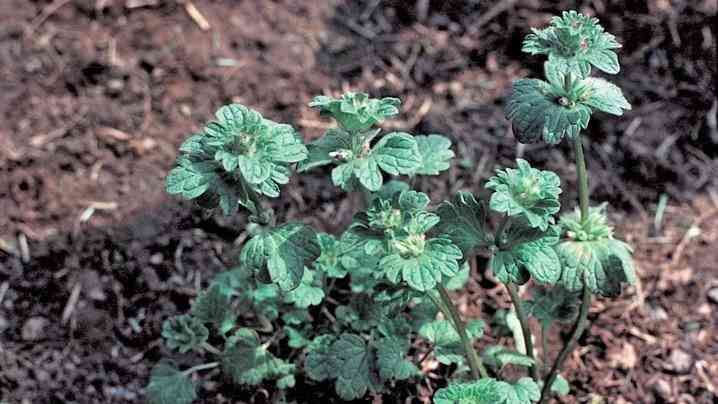
Creeping Charlie, also called ground ivy, has round, scalloped leaves on square stems that root wherever they touch soil — hence the "creeping." Crush a leaf and you’ll notice a distinct minty smell, and in spring it puts out small purple flowers. It favors shady, poorly drained turf, since that’s exactly where grass struggles to compete for light and space.

6. Oxalis (Yellow Woodsorrel)
Oxalis, or yellow woodsorrel, gets mistaken for clover at a quick glance, but look closer: its leaflets are heart-shaped rather than round, and it produces small yellow flowers from spring through summer. It thrives in moist, fertile soil but tolerates a wide range of conditions, which is part of why it turns up in so many lawns. Once its seed pods form, they can fling seed several feet in every direction, so a small patch doesn’t stay small for long.

7. Annual Bluegrass (Poa annua)
Despite the name, annual bluegrass is bright green, not blue, with a distinctive boat-shaped leaf tip that’s the easiest way to tell it apart from your turfgrass. It’s a winter annual across most of the country: it germinates in a single window in early fall, grows through the cool season, produces whitish seed heads in spring, and dies off as temperatures climb in early summer. It shows up fastest in thin, compacted, or overly moist areas of the lawn.

Now that you can pick these seven out of a lineup, here’s how to kick them out of your lawn and keep them from moving back in.
Mow High
Set your mower to the higher end of the recommended range for your grass type, and never remove more than a third of the blade in one pass. Taller grass shades the soil, which makes it harder for weed seeds to get the light they need to germinate.
Water Wisely
Water deeply but infrequently. Most lawns need about an inch of water per week, delivered in two waterings per week rather than a little every day. That trains your grass to grow deep, resilient roots, which out-competes shallow-rooted weeds like crabgrass and dollarweed for both water and space.
Feed Your Lawn
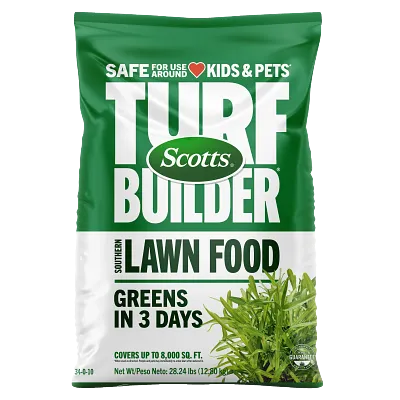
A well-fed lawn is a healthy lawn, and a healthy lawn is your best defense against weeds. Regular feedings with Turf Builder Lawn Food (or Turf Builder Southern Lawn Food if you’re in the south) help your grass grow thick enough to crowd out the competition before it starts.
Prevent Weeds Before They Sprout
The easiest weed to deal with is the one that never comes up.
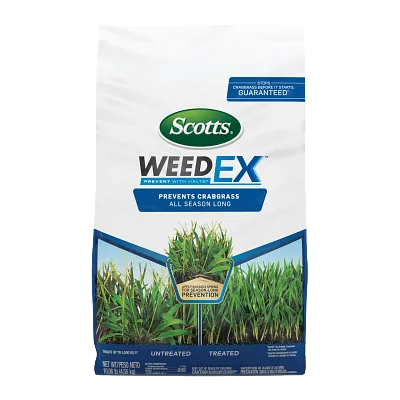
Apply Halts Crabgrass Preventer with Lawn Food in early spring to stop crabgrass, oxalis, and other listed weeds before they germinate. In fall, WeedEx Prevent with Halts will stop annual bluegrass and other winter weeds from sprouting.
Pre-emergent: a product applied before weed seeds germinate, forming a barrier in the soil that stops young weeds as they try to sprout — it won’t touch weeds that are already growing.
Kill What’s Already There
How you tackle weeds that have already moved in depends on whether you want whole-lawn coverage or just a few stubborn patches.
If weeds are wide-spread and you need to treat the entire lawn you have several options.
If you’ve just got a few places in the lawn with stubborn weeds, Ortho WeedClear Lawn Weed Killer Ready-to-Use lets you spot-treat crabgrass, dandelion, clover, chickweed, and creeping Charlie using the battery-powered Comfort Wand without treating parts of the lawn that doesn’t need it.
Whichever route you take, grass-type restrictions vary by product. Check the label before you buy or apply.
Important Note: Always read and follow the product label before using any weed control product—coverage area, application timing, and grass-type restrictions all vary by product.

Reentry times—how long to keep kids and pets off a treated lawn—varies by product, so the label is the final word for whichever product you use. Scotts and Ortho both formulate their lawn products to meet rigorous safety standards, and both believe in clear, transparent labeling so you can make an informed call for your own yard.
For most liquid weed control products,people and pets can go back on the treated area once the spray has dried. Granular weed control products will also list their watering and reentry directions right on the bag. Either way, check the label before you apply, and follow it before anyone heads back out to play.

Broadleaf weeds, like dandelion, clover, dollarweed, creeping Charlie, and oxalis, have wide leaves and usually flower. Grassy weeds, like crabgrass and annual bluegrass, look like turfgrass but grow where you don’t want them to. The distinction matters because most weed killers are formulated for one type or the other, not both.
Some weeds, like dandelion and dollarweed, can regrow from root fragments left behind after hand-pulling. Others, like crabgrass and annual bluegrass, are annual weeds that drop thousands of seeds before they die, so the next generation is already waiting in the soil. Building thick, healthy turf is helps close the door on new weeds long-term.
For crabgrass and other summer annual weeds, apply a pre-emergent in early spring, before soil temperatures reach about 55°F. For annual bluegrass and other winter weeds, when temperatures start to cool in fall is your prime prevention window.
Yes. That’s exactly what a selective herbicide is built to do. A selective herbicide is a weed killer formulated to target specific listed plant types (like broadleaf weeds) while leaving other listed plant types (like your lawn’s turfgrass) unharmed, as long as it’s used on a listed grass type at the labeled rate.
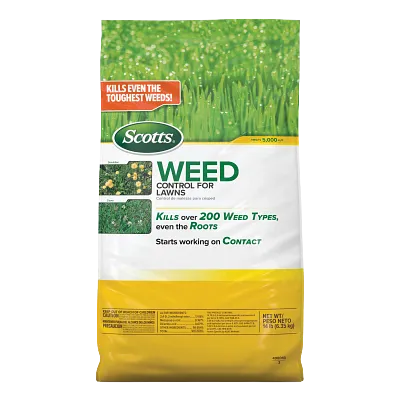
A granular option like Scotts Weed Control for Lawns, or a spot spray like Ortho WeedClear Lawn Weed Killer, are both selective herbicides, formulated to target listed weeds while leaving listed grass types unharmed as long as you follow the label’s grass-type restrictions and application rates.
It depends on the product. Ortho WeedClear products are labeled for reentry once the spray has dried. Scotts granular weed control products list their own watering and reentry directions on the bag. Check the label for whichever product you used, then let the whole family—four-legged members included—back out to enjoy the yard.
Dealing with lawn weeds is an ongoing process, not a one-and-done chore, but with a little knowledge and the right routine, you can keep your yard looking like the best room in the house, not a botanical experiment. A thick, healthy lawn is still your best defense against any weed.